

Advanced Energy Storage Solution
Engineered for performance, safety, and scalability
Next-Generation Energy Solution
Advance Capacitive Energy Solution (ACES) represents a major leap forward in energy storage, combining the best attributes of batteries and supercapacitors while greatly reducing their usual limitations. Built around a lithium carbon capacitor (LCC) architecture, ACES stores energy mainly through electrostatic adsorption rather than deep chemical reactions, delivering high energy density, rapid charge and discharge, extremely long cycle life, and enhanced safety.
ACES systems can be configured as pure LCC or as hybrid solutions alongside conventional batteries, providing reliable, safe, and largely maintenance‑free performance across a wide range of demanding environments
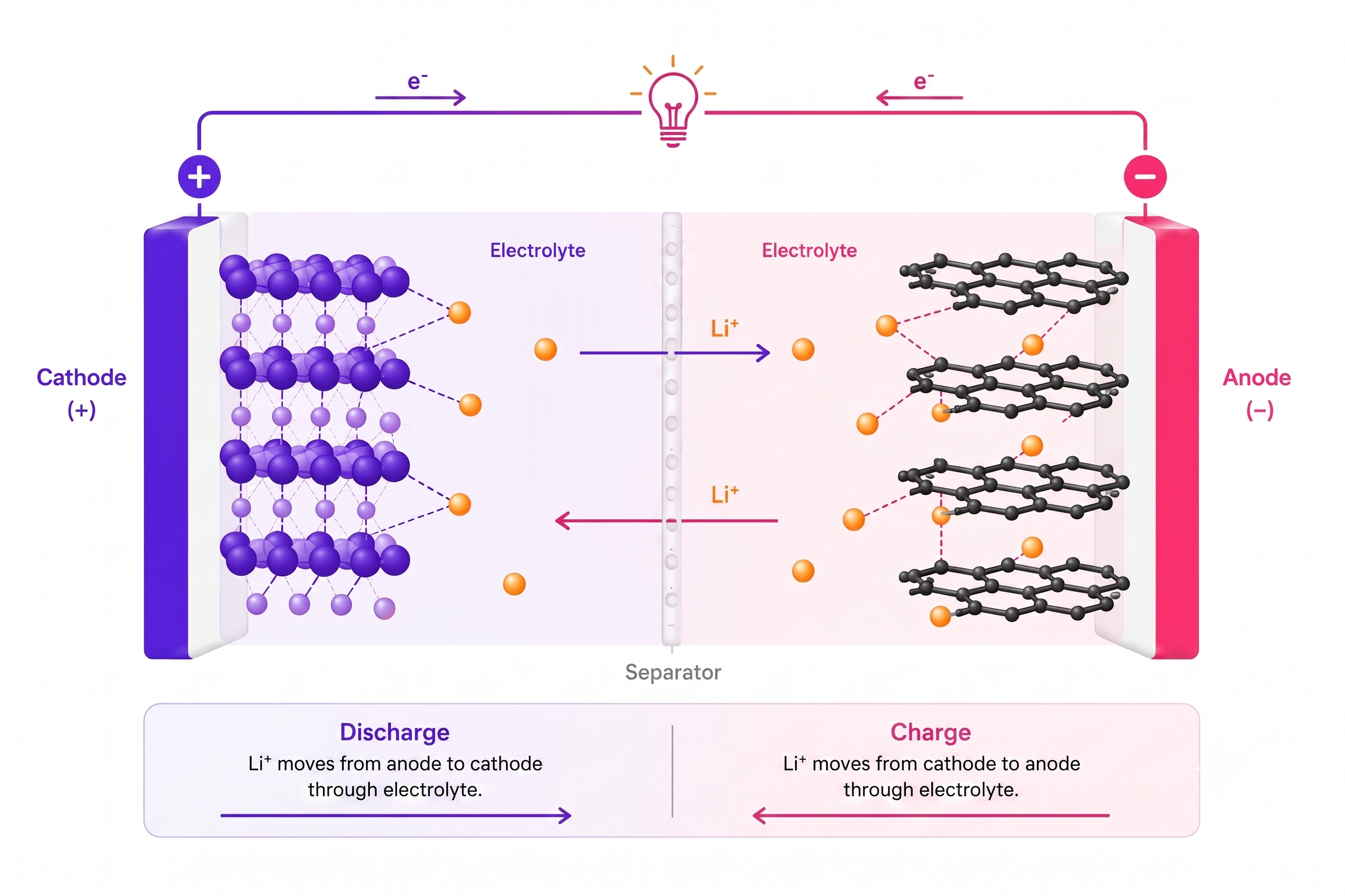
How ACES Technology Works
Electrostatic adsorption mechanism. No chemical reaction
6U Technology Advantages
Ultra-High Energy Density
140-160 Wh/kg – Close to LFP, ~30x higher than conventional supercapacitor
Ultra-High Safety Performance
Explosion and fire-proof, anti-freezing
Ultra-Long Cycle Life
50,000 – 500,000 cycles -> more than 10x longer than lithium batteries
Ultra-High Charge and Discharge
Up to 30C charge/discharge rates – instant power delivery
Ultra-High and Low Temperature Range
-40°C to +70°C operation
Ultra-Low Capacity Attenuation
Minimal degradation over lifespan
6U Technology Advantages
Ultra-High Energy Density
140-160 Wh/kg – Close to LFP, ~30x higher than conventional supercapacitor
Ultra-High Safety Performance
Explosion and fire-proof, anti-freezing
Ultra-High Charge and Discharge
Up to 30C charge/discharge rates – instant power delivery
Ultra-Long Cycle Life
50,000 – 500,000 cycles -> more than 10x longer than lithium batteries
Ultra-High and Low Temperature Range
-40°C to +70°C operation
Ultra-Low Capacity Attenuation
Minimal degradation over lifespan
Technical Comparisons
*Safety rating reflects relative risk of thermal runaway and fire in typical use, not an absolute guarantee
ACES (LCC) balances energy and power between conventional Li‑ion batteries and supercapacitor technologies, offering much higher energy than supercapacitors (LIC, EDLC) with far longer life and safety than typical Li‑ion batteries (MiNiCo, LiFePO4, LTO).
Technical Comparisons
Features
Energy Density (Wh/kg)
Cell Voltage Range
Charging Current
Discharging Current
Peak Current
Cycle Life
Safety
Charging Temperature
Discharging Temperature
MiNiCo
200 ~ 280
3.0V ~ 4.2V
1C
1C
2C
0.5k ~ 2k
Extremely Low
0 ~ 45°C
-20°C ~ 60°C
LiFePO4
160 ~ 180
2.0V ~ 3.6V
1C
1C ~ 2C
5C
3k ~ 8k
Moderate
0 ~ 45°C
-20°C ~ 60°C
LTO
50 ~ 100
1.5V ~ 2.8V
6C
6C
8C
10k ~ 20k
High
-40°C ~ 65°C
-40°C ~ 65°C
Lead Acid
40
1.7V ~ 2.1V
0.2C
1C
5C ~ 8C
0.3k ~ 0.5k
Average
0 ~ 45°C
-20°C ~ 45°C
ACES (LCC)
140 ~ 160
2.5V ~ 4.2V
5C ~ 30C
5C ~ 30C
50C
50k ~ 500k
Extremely High
-40°C ~ 70°C
-40°C ~ 70°C
LIC
25
2.2V ~ 3.8V
50C ~ 100C
50C ~ 100C
100C
500k
Extremely High
-30°C ~ 70°C
-30°C ~ 70°C
EDLC
5
0 ~ 2.7V
100C ~ 200C
100C ~ 200C
500C
1000k
Extremely High
-40°C ~ 70°C
-40°C ~ 70°C