


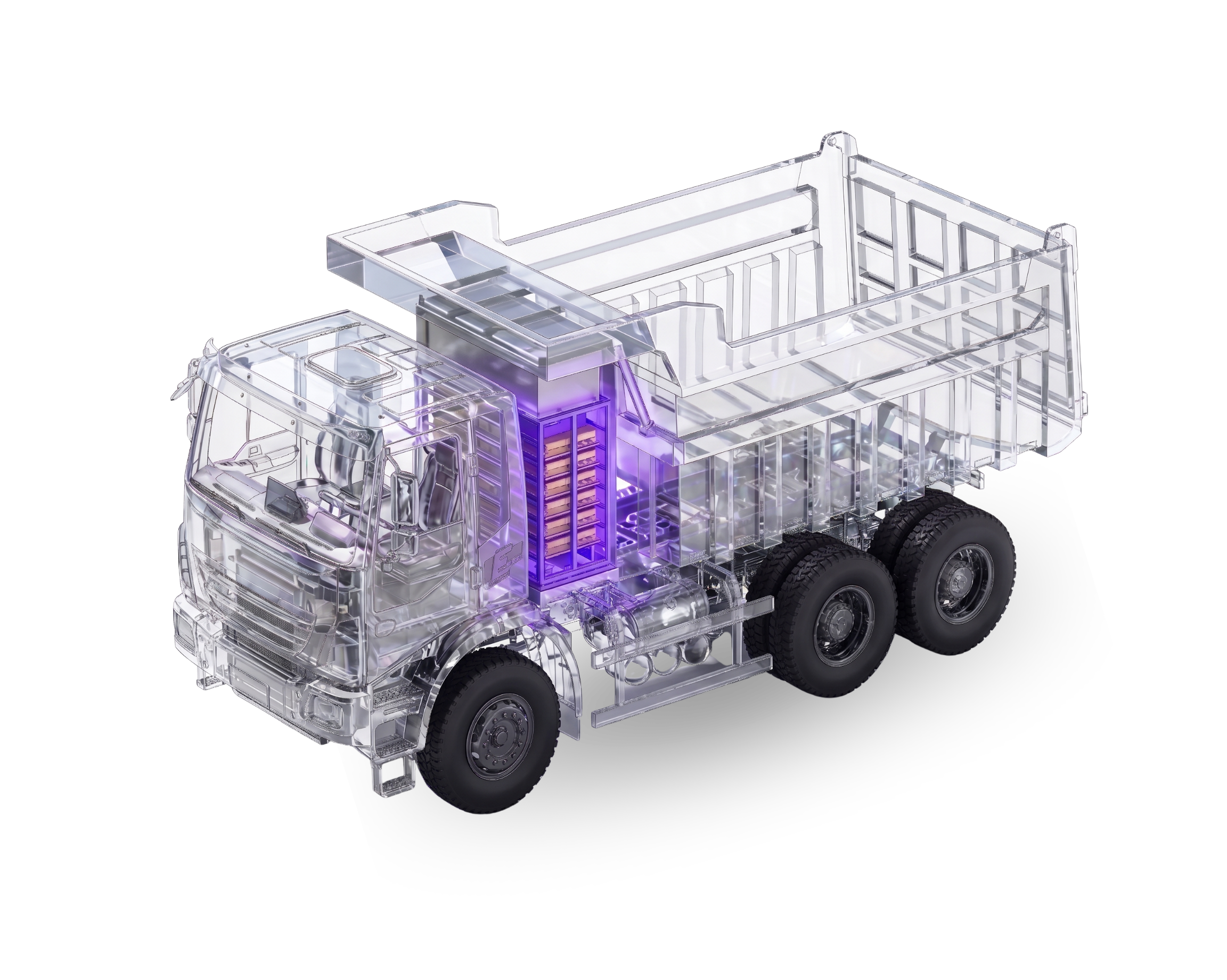
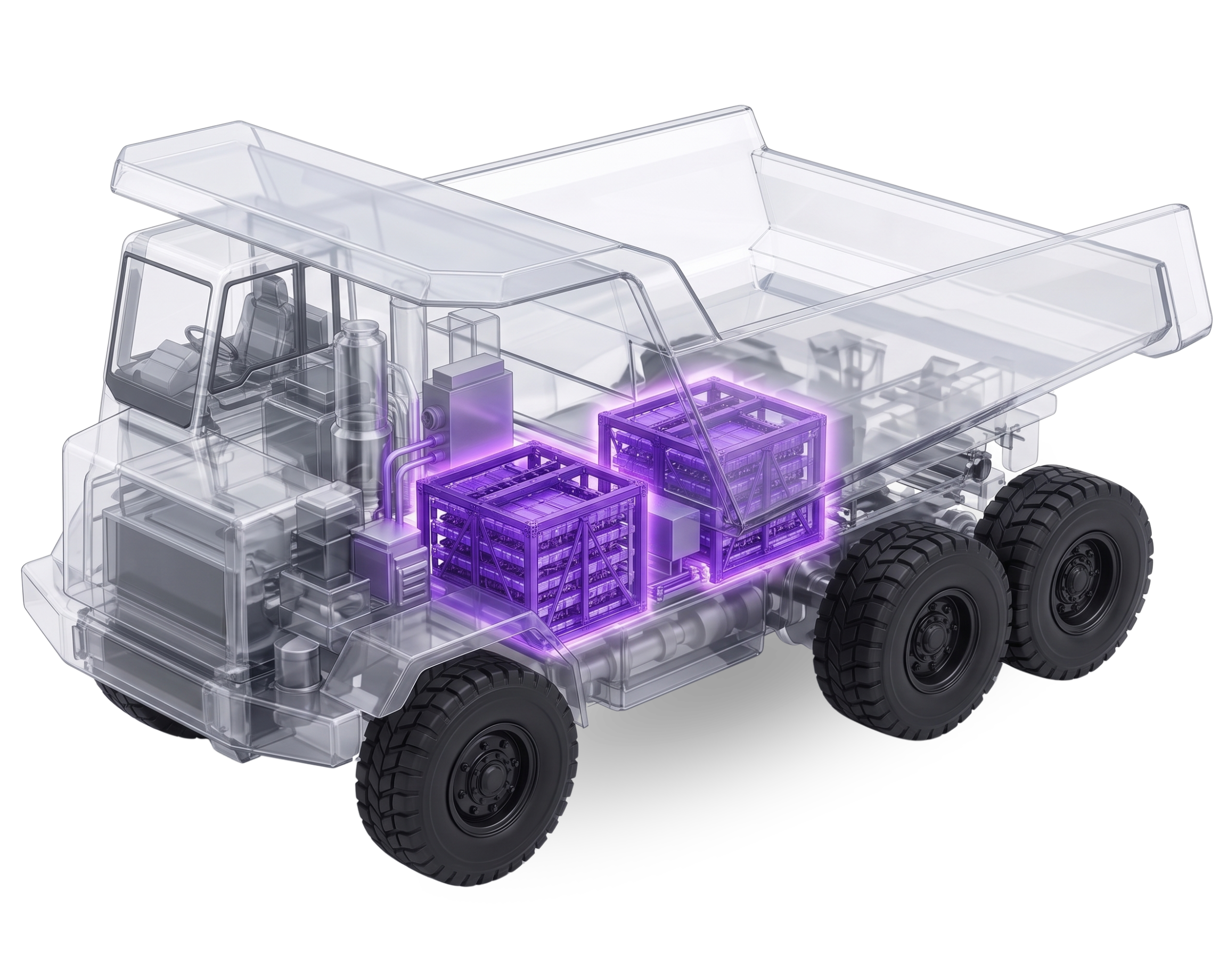
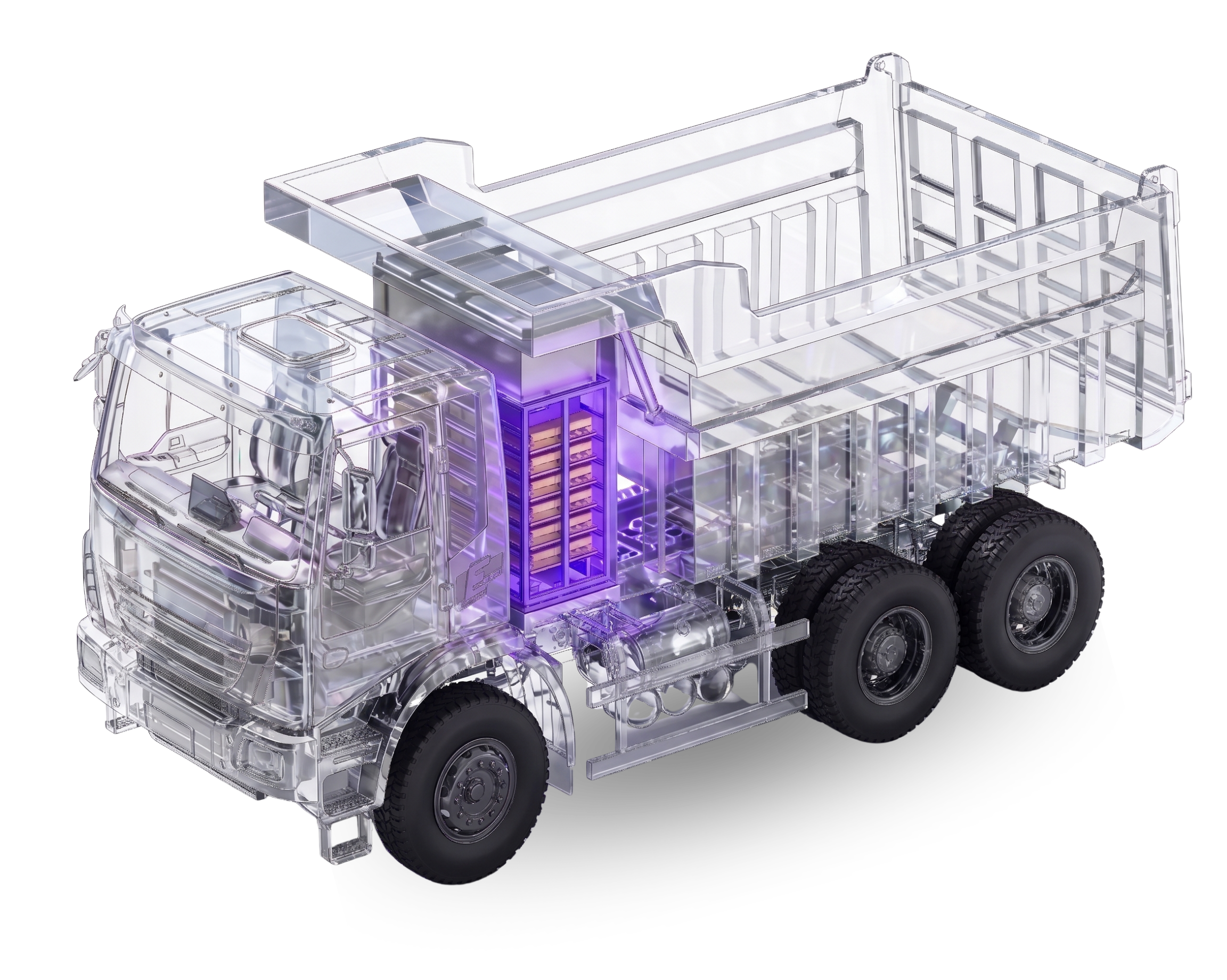
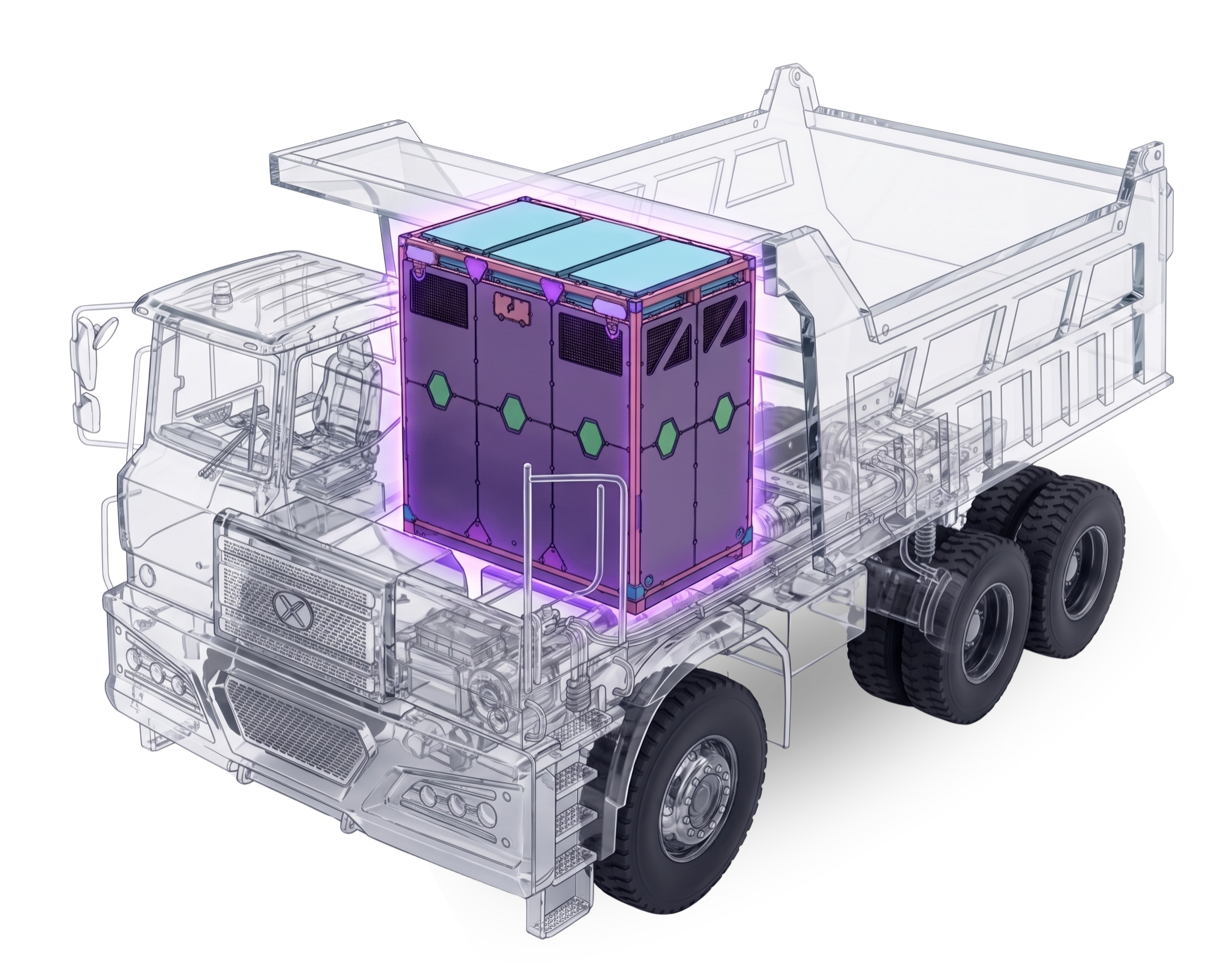

Mining trucks operate in short, repetitive haul cycles, making them well suited to fast opportunity charging near the working area. ACES can support continuous operation while reducing downtime, infrastructure burden, and lifecycle cost.
Mining Trucks
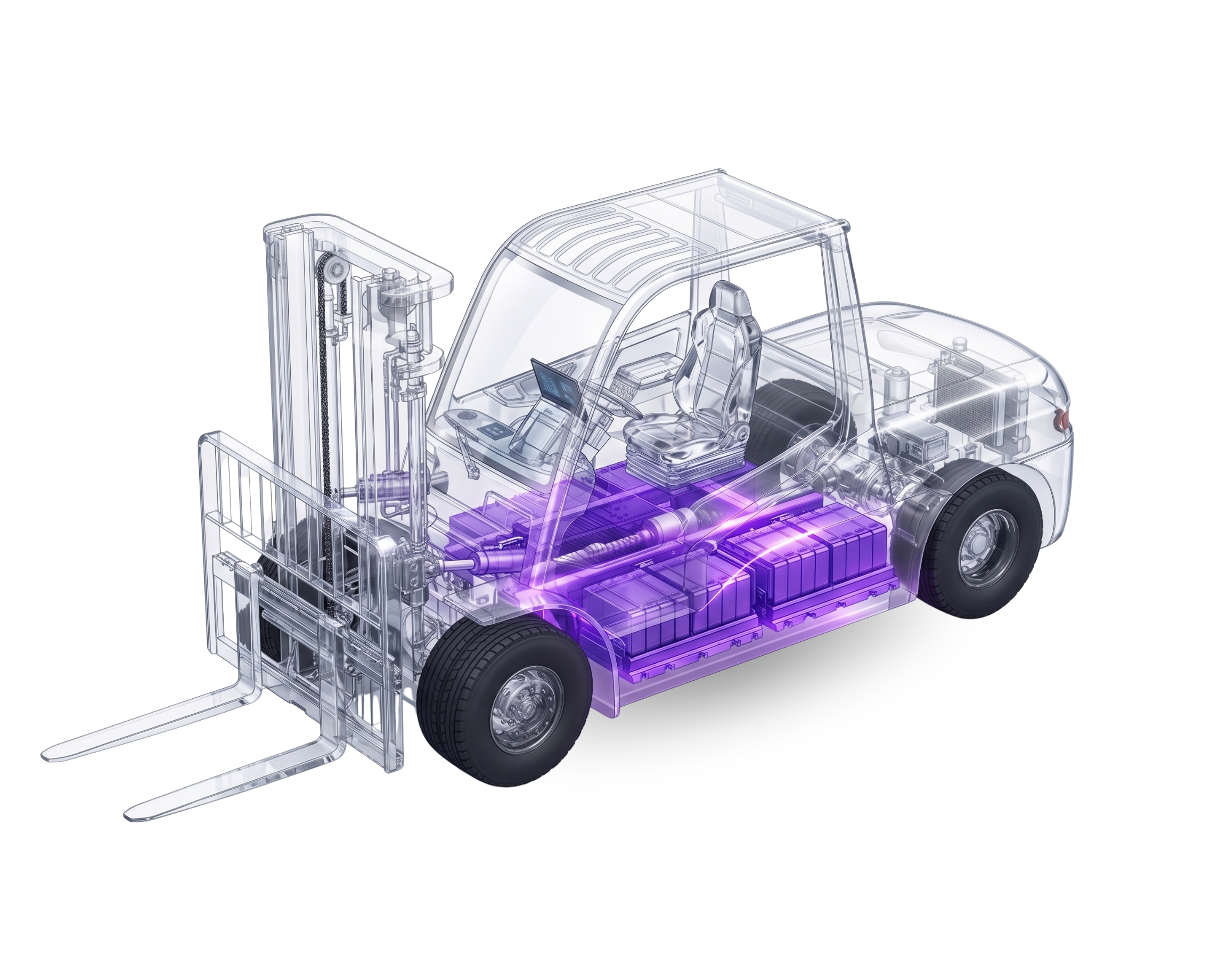
Forklifts
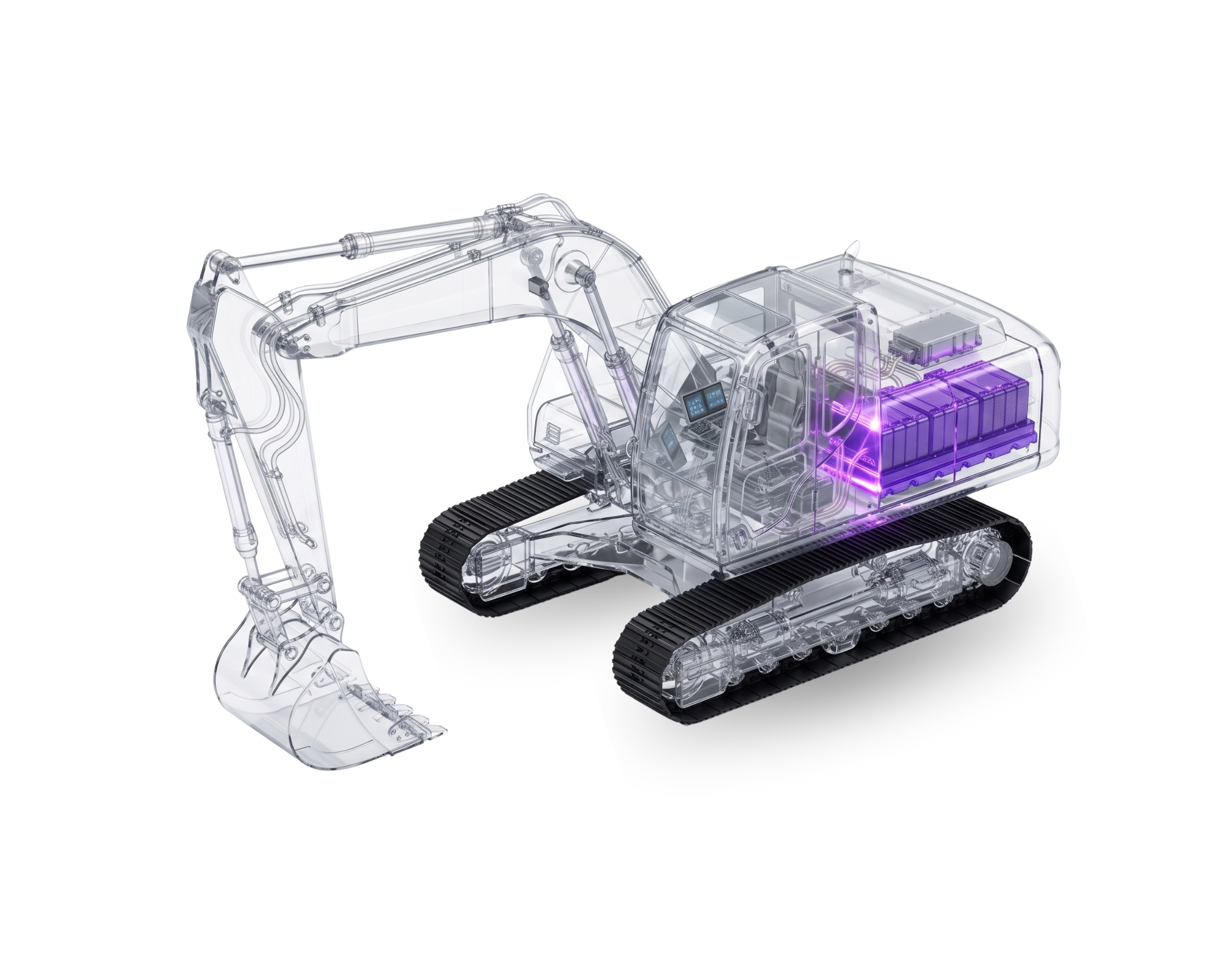
Excavators
6 times faster than lithium battery – achieving 10-minute top-up charging, maximising truck operating time.
Eliminates swapping infrastructure investment and gives greater operational flexibility.
At least 10x the cycle life of lithium batteries – reduce replacement frequency and TCO.
Retains 90% performance even at -40℃.
Minimal fire or explosion risk.
6 times faster than lithium battery – achieving 10-minute top-up charging, maximising truck operating time.
Eliminates swapping infrastructure investment and gives greater operational flexibility.
At least 10x the cycle life of lithium batteries – reduce replacement frequency and TCO.
Retains 90% performance even at -40℃.
Minimal fire or explosion risk.
Different battery swapping solutions for different types of mining trucks: split back type, integrated back type, deck type, etc. Three battery swapping solutions support the mining truck battery swapping station. Currently, the solutions have been applied in multiple projects. Users can flexibly choose according to their needs.
Traditional energy-saving solutions include adjusting the balance, energy feedback, and braking resistor absorption, aiming to solve the problem of “reverse power generation” in oil pumping units. Adjusting the balance has drawbacks such as high labor intensity for workers, requiring system shutdown, and lack of dynamic adjustment capabilities. Energy feedback typically suffers from harmonic pollution to the power grid and cannot ensure safe grid operation. Braking resistor absorption, on the other hand, leads to energy waste, excessively high system temperatures causing fires, and reduced component lifespan.
A novel energy-saving solution employs a supercapacitor energy absorption device. When the pumping unit descends, this energy storage system converts excess kinetic potential energy into electrical energy and stores it in the supercapacitor. When the pumping unit ascends, the supercapacitor discharges to the motor. This method can achieve an annual energy saving rate of 20-30%.




Our Contact
Suite XXX, Example Plaza
No. XX, Example Street
XXXXX City, Country
info@company.com
+00 0000 000000
Mon – Fri, 9:00 AM – 6:00 PM
Copyright © 2026 Westara Technology
Powered by Westara Technology